






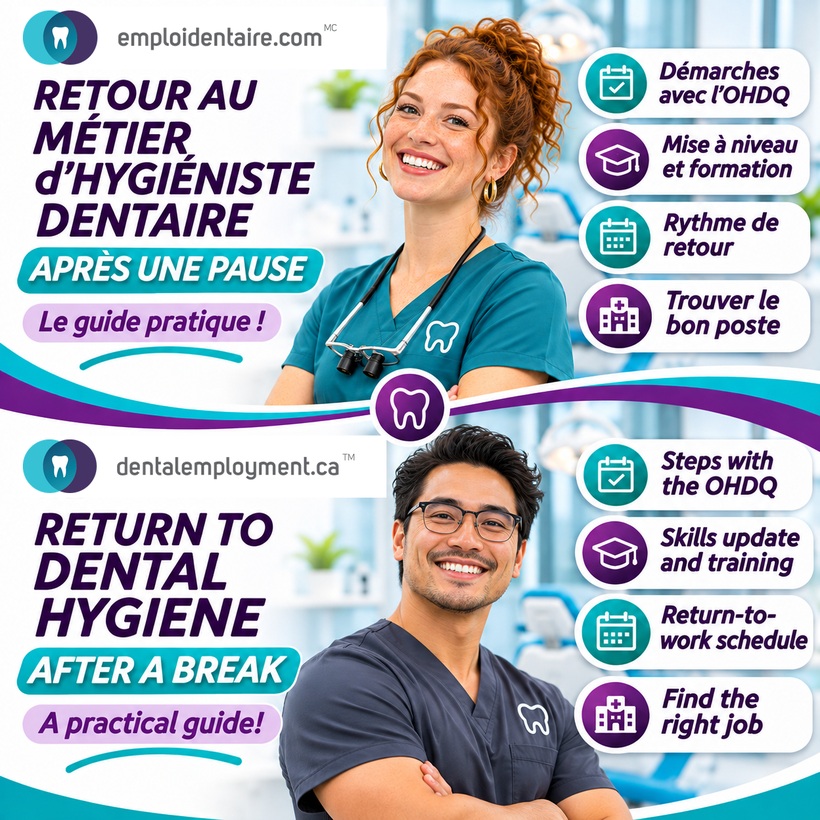
Returning to Work as a Dental Hygienist in Quebec: A Practical Guide
Have you stepped away from dental hygiene for a few months or several years because of parental leave, studies, personal circumstances or a different career opportunity? Now you may be thinking about returning to work as a dental hygienist in Quebec.
The good news is that a career break does not erase your education or previous experience. However, a successful return requires checking your authorization to practise, refreshing certain skills and choosing a workplace that fits your current needs.
This practical guide explains how to prepare for your return to dental hygiene, step by step, with greater confidence.
1. Check Your Status With the OHDQ Before Returning to Work
Your first step should be to contact the Ordre des hygiénistes dentaires du Québec (OHDQ).
Having a dental hygiene diploma and previous clinical experience does not automatically mean you are currently authorized to practise. Your situation may depend on your professional registration, the length of your absence and the requirements applicable when you return.
Essential Things to Verify
- Confirm whether you are currently registered on the OHDQ roll.
- Find out what steps are required if your registration was interrupted.
- Ask whether special reinstatement or return-to-practice conditions apply.
- Review your continuing education obligations.
- Confirm applicable professional liability insurance requirements.
- Allow enough time for administrative processing before setting a start date.
Practical tip: keep a written record of the information you receive and the steps you complete. This will help you organize your return and communicate a realistic availability date to potential employers.
Every professional situation is different. The OHDQ is the appropriate authority to confirm the requirements that apply to your circumstances.
2. Refresh Your Clinical Knowledge and Skills
Clinical techniques, equipment, digital tools and professional protocols can change during a career break.
Targeted preparation can help you regain familiarity with your profession and feel more comfortable during your first days back.
Continuing Education Requirements
The OHDQ has continuing education requirements that apply according to its current program and relevant circumstances. The original version of this article referred to 40 hours over a two-year reference period. Before planning your training, confirm the requirements currently in force and those that apply specifically to your return with the OHDQ.
Also ask whether your planned courses are recognized and whether additional measures are required after an interruption in professional practice.
Skills Worth Reviewing
- Infection prevention and control: review current protocols, sterilization procedures and safety practices.
- Instrumentation: rebuild confidence with instruments and techniques within your authorized scope of practice.
- Radiography: update your knowledge and verify the conditions applicable to the activities you will perform.
- Clinical assessment and prevention: review relevant approaches and professional recommendations.
- Patient records: become familiar with documentation and confidentiality requirements.
- Dental software: explore the practice management and scheduling systems used by clinics.
You do not need to master everything immediately. The goal is to identify your learning needs, prepare responsibly and seek appropriate support.
3. Choose a Return-to-Work Schedule That Suits You
Returning to dental hygiene does not necessarily mean going back to full-time work immediately.
Depending on your availability and employers' needs, several arrangements may make the transition easier.
A Part-Time Position
Working two or three days per week may help you rebuild your professional routine while maintaining balance with your other responsibilities.
A Gradual Schedule
Ask whether the clinic can accommodate a lighter schedule initially, when operational needs allow.
Temporary Dental Hygiene Assignments
Temporary assignments can help you experience different workplaces, expand your professional network and identify the type of clinic that suits you best.
However, this option should only be considered once you have the necessary professional authorization and are adequately prepared for the responsibilities involved.
For additional guidance, read our practical guide to dental hygienist temp jobs in Quebec.
A Clinic That Offers Mentoring
A welcoming team, an experienced colleague and a structured onboarding process can make a meaningful difference.
Remember: the best return-to-work schedule is one that helps you regain confidence while maintaining safe, high-quality patient care.
4. Update Your Resume to Highlight Your Experience
A career break should not prevent you from presenting a strong application.
Your goal is to show employers what you know, which skills remain valuable and how you have prepared to return to dental hygiene.
What Should Your Resume Include?
- Your dental hygiene education and relevant professional experience.
- Your clinical skills and strengths in patient communication.
- Recent training and relevant professional development.
- Your current availability and preferred work location.
- Additional experience that brings value to your professional profile.
How Should You Explain a Career Break?
Describe the interruption briefly without sharing personal details you would rather keep private.
For example:
"After taking a professional break to focus on other priorities, I am ready to return to dental hygiene. I am preparing by refreshing my knowledge and looking for a clinic where I can contribute to quality patient care and a positive team environment."
This approach emphasizes your motivation and preparation rather than the length of your absence.
5. Prepare for Your Dental Clinic Interview
An interview is an opportunity to present your experience and determine whether the employer can provide a supportive environment for your return.
Questions You May Be Asked
- Why do you want to return to dental hygiene?
- Which skills would you like to refresh?
- What type of schedule are you looking for?
- What motivates you about working with patients?
- What kind of support would help you transition successfully?
Questions to Ask the Employer
- How does the clinic onboard a new dental hygienist?
- Is a mentoring or orientation period available?
- Which software and equipment does the clinic use?
- How are appointments and work schedules organized?
- What are the clinic's expectations during the first few weeks?
Open communication helps both sides determine whether expectations are compatible.
6. Find a Dental Clinic That Supports Your Fresh Start
Compensation matters, but it should not be your only consideration.
For a professional returning after a career break, the quality of onboarding and daily work organization can be just as important.
Key Factors to Compare
- Schedule: number of days, start and finish times, evenings and weekends.
- Location: commuting time, parking and accessibility.
- Team: collaboration, communication and support among colleagues.
- Equipment: instruments, technology and software.
- Onboarding: orientation, mentoring and expectations during the first weeks.
- Working conditions: compensation, benefits and employment arrangements.
If possible, visit the clinic and meet the team before accepting an offer.
The right job is not necessarily the one offering the most hours. It is the one that matches your circumstances and supports your long-term professional well-being.
7. A Practical 30-Day Plan to Prepare Your Return
Here is an example of a four-week planning schedule. It is a preparation tool, not a guaranteed timeline: some professional or administrative requirements may take longer.
Week 1: Clarify Your Professional Situation
- Contact the OHDQ.
- Verify your authorization to practise and any return-to-work conditions.
- Define your ideal schedule and preferred location.
- Identify the skills you need to refresh.
Week 2: Prepare Your Skills Update
- Identify relevant training opportunities.
- Review professional protocols and practices.
- Update your resume.
- Prepare a short explanation of your career path.
Week 3: Explore Dental Employment Opportunities
- Browse dental hygiene job postings.
- Create or update your candidate profile.
- Identify clinics that match your preferences.
- Prepare questions for interviews.
Week 4: Move Toward Your Next Position
- Submit targeted applications.
- Meet potential employers.
- Compare working conditions and onboarding opportunities.
- Plan your return date once all applicable professional requirements have been satisfied.
Adjust this schedule to your circumstances. The priority is to move forward systematically without rushing any steps required for a safe return to practice.
8. Common Mistakes to Avoid When Returning to Dental Hygiene
- Applying without checking your professional status: confirm the conditions that apply to your return first.
- Underestimating changes during your absence: take time to refresh your knowledge.
- Accepting an overly demanding schedule immediately: choose a workload that fits your needs and goals.
- Failing to discuss onboarding: ask specific questions about available support.
- Focusing only on salary: consider the team, equipment and daily organization as well.
- Waiting for the perfect position before preparing: update your application and begin exploring opportunities gradually.
FAQ: Returning to Dental Hygiene in Quebec
Can I Return to Dental Hygiene After Several Years Away?
Returning may be possible, but the steps depend on your professional situation and current requirements. Contact the OHDQ to confirm the conditions that apply before resuming reserved professional activities.
Do I Need to Complete My Dental Hygiene Education Again?
Not necessarily. Any training, refresher education or reinstatement requirements depend on your file and the applicable rules. The OHDQ can provide guidance.
How Many Continuing Education Hours Do I Need?
The requirements depend on the current continuing education program and your circumstances. Confirm the required hours, eligible training and any special return-to-practice conditions directly with the OHDQ.
Is Returning Part-Time a Good Idea?
Part-time work may be a good option if you want to rebuild your routine gradually. The best arrangement depends on your financial needs, availability and available positions.
Can I Start With Temporary Assignments?
Yes, once your authorization to practise is confirmed and you are ready to meet the responsibilities of the role. Temporary assignments may help you explore different clinical environments.
How Do I Explain a Long Career Gap on My Resume?
Briefly acknowledge the interruption and focus on your skills, motivation and the steps you have taken to prepare for your return.
How Can I Find a Clinic That Welcomes Returning Dental Hygienists?
Look for employers with structured onboarding, ask about mentoring and clearly present your experience and availability. Keeping your candidate profile updated can also support your job search.
Ready to Return to Your Dental Hygiene Career?
Returning to dental hygiene after a break is an important decision. By checking your status with the OHDQ, refreshing your skills, preparing a strong application and finding the right clinic, you can approach this new chapter with greater confidence.
Whether you are looking for a permanent position, part-time work or temporary assignments, take time to explore opportunities in your area.
Since 2002, DentalEmployment.ca has connected dental professionals and employers throughout Quebec.
Browse dental job opportunities in Quebec
Your next professional opportunity could be the beginning of an exciting new chapter in your career.


